

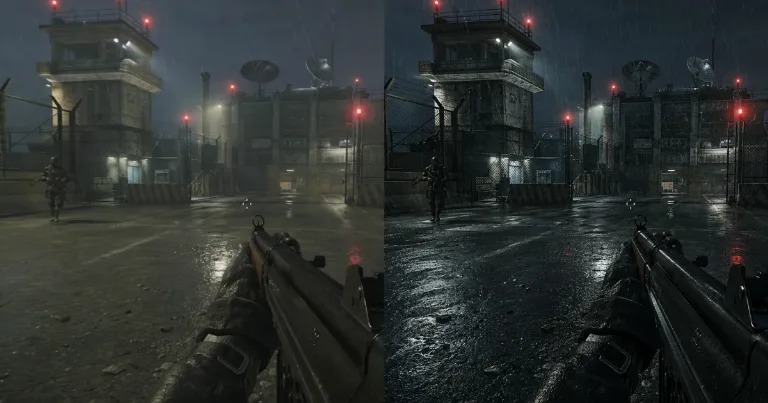

The original Call of Duty: Black Ops returned to PlayStation on July 9, and one recommendation quickly spread among PS5 players reporting sluggish controls: download the PS4 version instead. Many say the older build feels more responsive, but a new community latency comparison challenges the idea that it is a measurable fix.
The PS4 build is a workaround, not a proven fix
Players who tried both versions have reported sharply different results. Some describe an immediate improvement after installing the PS4 build on PS5. Others say the change is minor or that the two versions feel the same.
The strongest numerical counterpoint arrived on July 12. A community latency comparison estimated controller response at roughly 46 milliseconds on both the PS4 and PS5 versions. The original PlayStation 3 release measured approximately 38 milliseconds in the same setup.
That does not prove every player reporting an improvement is mistaken. It does mean the PS4 version should be treated as a player-reported workaround, not a confirmed solution.
Why players started recommending the PS4 version
Shortly after Black Ops launched on PlayStation 4 and PlayStation 5, players began describing aiming as unusually sluggish compared with the original game. The complaints were not limited to multiplayer matches. Some users also noticed delayed-feeling controls offline, pointing away from network performance as the only explanation.
As players tested different display and console settings, the PS4 build became one of the most repeated suggestions. Several users said it produced smoother aiming and a more immediate response from the right stick when played on PS5.
The reports are not unanimous. Some players noticed no meaningful improvement, while others said the PS4 build helped with responsiveness but did not solve the game's large right-stick deadzone.
The community test complicates that recommendation
The July 12 comparison used high-frame-rate video to estimate the time between an input and the corresponding response on screen. It found about 11 slow-motion frames of delay on both modern PlayStation builds and nine on PS3, producing the estimates of roughly 46ms and 38ms.
The person who performed the comparison also acknowledged that the method could be off by approximately 5 to 10 milliseconds. It is a useful community test, but not a controlled laboratory benchmark.
Even with that limitation, the result challenges claims that switching builds dramatically reduces input latency. Any perceived improvement could come from another difference between the versions, a display or controller variable, or an effect too small for this particular test to capture reliably.
Input latency and deadzone are separate problems
Part of the confusion comes from players using "input lag" to describe several different issues.
Controller latency is the delay between moving a stick or pressing a button and seeing the action on screen. A deadzone determines how far an analog stick must move before the game registers it. An oversized deadzone can make aiming feel heavy or unresponsive even when the measured latency does not change.
Online connection delay is different again. It can affect hit registration and what happens during multiplayer matches without changing how quickly the console reads a local controller input.
That distinction explains why a player might say the PS4 version feels better while still noticing poor fine aiming. Switching builds may change the overall experience for some users without removing the deadzone behavior they are actually reacting to.
Should PS5 players install the PS4 version?
Trying the PS4 version is reasonable if the native PS5 build feels unusually slow. The PlayStation Store lists the game for both PS4 and PS5, allowing eligible owners to choose which version they install on a PS5 console.
Players should not expect a guaranteed fix. Current reports conflict, the July 12 measurement found little difference between the builds, and the large deadzone may remain even when the older version feels smoother.
As of July 13, Activision and Treyarch have not publicly acknowledged these specific input-lag reports or announced a controller-responsiveness patch for the new PlayStation ports. Until an official update or more controlled testing arrives, the PS4 build remains an option worth comparing rather than a proven answer.