


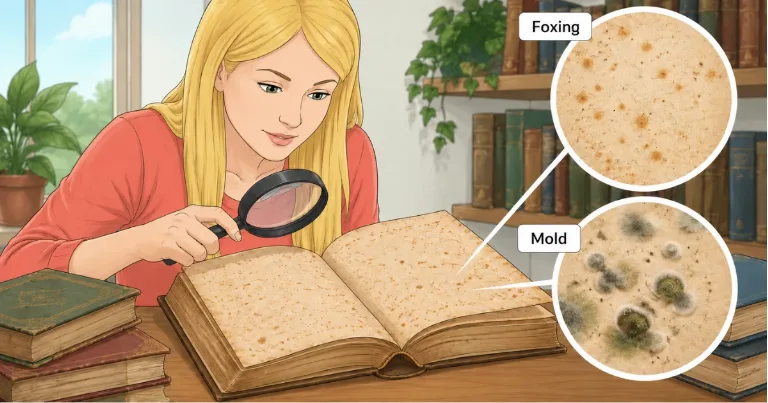

If an old book has yellow, orange, or brown spots on the pages, the real question is usually simple: is it foxing or mold? Many dry, flat spots are foxing, which is common in older paper. Mold is more worrying, and the clues are usually smell, texture, dampness, and whether the marks look like growth sitting on the page.
Foxing vs mold: the simple difference
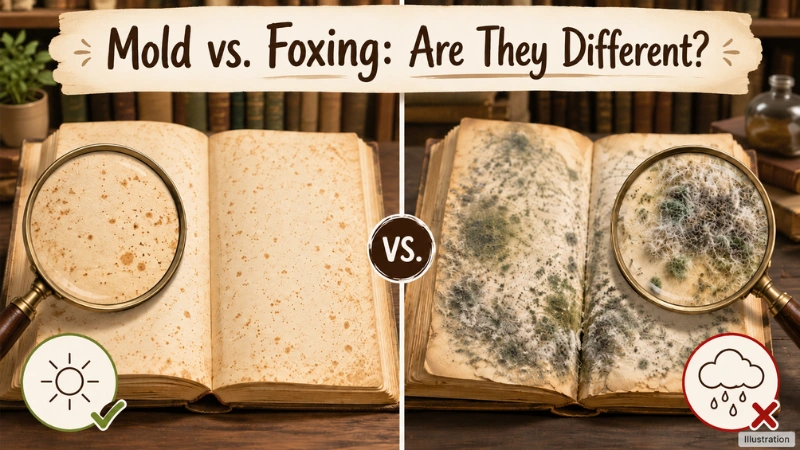
Foxing is staining in the paper. Mold is growth on or in the paper. That is the easiest way to separate the two before you decide what to do with the book.
| What to check | Foxing | Mold |
|---|---|---|
| Look | Flat yellow, orange, rusty, or brown spots | Fuzzy, powdery, smeared, white, gray, green, or dark growth |
| Feel | Usually flat and dry, like the mark is part of the paper | May feel raised, dusty, damp, or soft |
| Smell | May smell old, dry, or dusty | Often smells musty, wet, sour, or like a damp room |
| Other clues | No fresh dampness, no stuck pages, no spreading patches | Water stains, warped pages, stuck pages, or soft covers |
Foxing is the name collectors use for small rusty, yellow, orange, or brown marks on old paper. You might see it along the page edges, near the margins, or scattered across a few pages like tiny tea stains.
The simple answer is this: if the spots are flat, dry, and part of the paper, they are probably foxing. That does not make the book perfect, but it also does not mean the book is automatically dangerous or ruined.
Mold is different because it can grow when paper has been damp. The Northeast Document Conservation Center describes active mold as something that may feel wet or smear when touched, and it may come with a musty or earthy smell. If you see fuzzy texture, damp damage, or marks that look like they sit on top of the page, treat the book more carefully.
A book can smell old without being moldy. That dry, dusty old-book smell is not the same as a damp basement smell. If the book smells wet, sour, or strongly musty, keep it away from the rest of your shelf until you are sure.
Why old books get foxing marks
Foxing happens because paper changes as it ages. Book collectors and conservation sources often connect it to impurities in the paper, oxidation, humidity, and sometimes microorganisms. The exact cause is not always simple, which is why two books from the same shelf can age differently.
Humidity is the big thing to watch. In warm and humid places like the Philippines, old books can spot faster if they are stored without enough airflow. Closed cabinets, plastic boxes, storage rooms, garages, and shelves near damp walls can all trap moisture around paper.
Low humidity is not usually the mold problem. Very dry air can make old paper brittle over time, but damp air is what usually brings yellow spots, musty smells, and mold risk.
Foxing is usually cosmetic. It can make a book look older and lower its value for collectors, but it does not usually eat through the page by itself. Brittle, crumbling paper is a different issue and often comes from acidic paper aging badly.
If you bought the book secondhand, do not panic after seeing a few dry spots. Many used books have some foxing. The real question is whether the book is dry, stable, and safe to keep near the rest of your shelf.
What to do before putting the book back on your shelf
Start by checking the book in good light. Look at the page edges, inside covers, spine, and any pages that feel wavy or stuck together. Use the whole picture, not one sign by itself: color, smell, texture, dampness, and whether the marks seem to be changing.
If the marks are flat and dry, and the book does not smell damp, you can usually keep it. If you are unsure, keep the book away from your other books for a few days. Place it in a dry, airy spot, not sealed inside plastic. Sealed plastic can trap moisture, which is exactly what you do not want.
Do not wipe old pages with water, alcohol, bleach, perfume, or cleaning spray. Paper is easy to damage, and old ink or binding glue may react badly. If the book is valuable, sentimental, signed, or rare, a professional book conservator is safer than home experiments.
For a normal reading copy, the best care is simple:
- Keep it dry and away from direct sunlight
- Store it upright or flat with gentle support
- Avoid plastic boxes unless the book is fully dry and the storage area is controlled
- Move moldy-smelling books away from the main shelf
- Wash your hands after handling a book that smells damp or looks dusty
If the book has fuzzy growth, a strong musty smell, or water damage, do not treat it like ordinary foxing. Keep it separate, avoid breathing in dust from it, and consider replacing it if it is not valuable.
Yellow spots on old books can look scary at first, but the difference is usually in the texture and smell. Dry, flat staining points more toward foxing. Fuzzy, damp, musty growth is the sign to take seriously.