
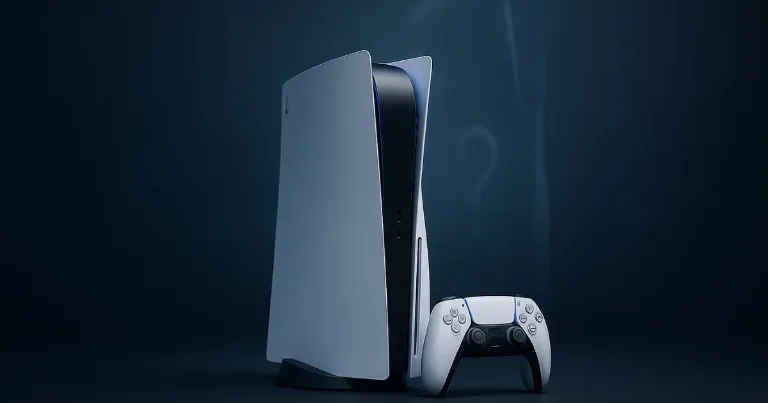

I was scrolling through my usual gaming news feeds when I saw Sony’s CFO drop that line about PS5 being “only in the middle of the journey.” Five years into the console, that sounds wild at first. For a lot of people, that sentence instantly turned into two questions in their head:
-
Does this mean PS6 is far away?
-
Or is Sony just going to drag this generation out forever?
So instead of panicking about a console that does not even exist publicly yet, it is better to unpack what was actually said, what is confirmed, and what is just people guessing. Once you strip away the noise, the picture around PS5 and PS6 is a lot clearer.
What Sony Actually Said About PS5 Being “Mid-Cycle”
The original context was Sony's November 2025 earnings discussion. CFO Lin Tao described PlayStation 5 as being around the midpoint of its lifecycle and discussed extending that lifecycle. That was the statement this article originally examined, not a permanent label for the console.
If you check coverage of that call, like this report from Polygon, you will see two important details buried under the headlines:
-
Sony directly compared PS5’s future to how long PS4 stayed relevant.
-
They refused to say anything concrete about PS6, even when asked.
That combination matters. When a company calls a console “mid-cycle,” they are not secretly confirming a PS6 release date. They are telling investors that the current machine is still profitable, still selling, and still getting games.
The later wording matters. In Sony's February 2026 earnings Q&A, the company discussed PS5 as being in the latter half of its lifecycle. Continuing software and service business can coexist with declining hardware sales; that does not provide a successor launch date.
How PS5’s Life Cycle Looks From Here
To figure out where PS5 is going, it helps to look backwards.
PlayStation 4 launched near the end of 2013. It got a mid-cycle upgrade in the form of PS4 Pro a few years later, then finally handed the baton to PS5 in late 2020. Even after that, PS4 support did not just disappear. Big games still shipped with PS4 versions for years.
Sony is clearly using that same long tail as a template. When the CFO talks about expanding PS5’s journey, it lines up with what happened before: one main console generation, a stronger mid-gen model, then a slow handoff to the next system instead of a hard cut.
There are a few reasons the PS5 cycle is stretching out like this:
-
Modern games take forever to build. Huge open worlds, live service systems, and high-end visuals mean devs need many years per project. Studios benefit from a stable hardware target.
-
The PS5 launch years were messy. Global supply issues made it tough for people to even find a PS5 early on. A lot of players only got one in the last couple of years, so from their perspective the generation feels young.
-
PS5 Pro is here to extend things. A mid-gen upgrade gives developers extra power without forcing a clean break. It lets Sony keep saying “PS5” while slowly raising the technical ceiling.
-
Live service and subscriptions like long generations. Multiplayer titles, battle passes, and services like PS Plus work best when people are not split across a bunch of different hardware.
Put that together and the original midpoint comment becomes less dramatic. It described Sony's view of the business at the time. It did not guarantee a particular number of years of first-party games or cross-generation releases.
What We Really Know About PS6 So Far
Here is the part that often gets twisted. There is a giant gap between “PS6 is in development” and “PS6 is coming out on this exact date.”
Sony and AMD have both talked publicly about working together on new console hardware. Presentations around a project often called “Project Amethyst” lay out tech that clearly is not meant for the base PS5. It covers future upscaling, better ray tracing, and AI-assisted rendering that needs more horsepower than the current console can offer.
More recently, Sony's November 5, 2026 earnings transcript said the company intended to advance preparations for its next-generation platform during the following fiscal year. That is a development milestone, not a console launch window.
Those statements do not settle the consumer details people actually want:
-
A full product unveiling, distinct from acknowledging next-generation development.
-
A confirmed release window for the next console.
-
Final pricing, specifications and branding.
Most of the timelines floating around right now are educated guesses. Analysts and industry watchers are mostly pointing at the back half of this decade. They look at previous gaps between consoles, GPU roadmaps from AMD, and how long Sony rode the PS4 era before moving on.
That is how you end up with the usual “late 2027 or 2028” range that keeps getting repeated. It is not pulled out of thin air, but it is not a promise either. It is a pattern.
Meanwhile, regular players chatting about it tend to land in a similar place emotionally, even if they do not care about hardware roadmaps. You see the same themes repeat:
-
Some people are already planning to skip PS6 at launch and wait for its own mid-gen refresh.
-
Others say they only just got a PS5 and do not want to think about a new box for several more years.
-
A chunk of players are curious about PS6 specs, but still mainly focused on what games are coming to PS5.
Next-generation preparation is confirmed work. The point for players is that development progress and retail availability are different things. None of the cited lifecycle comments tells you when to replace a PS5.
How Long PS5 And PS6 Will Probably Overlap
What actually matters for most of us is not the exact PS6 release year, but how long PS5 will still feel like a valid platform once that happens.
We already have one very clear example. When PS5 arrived, PS4 did not instantly become dead hardware. For several years, a lot of big releases still launched on both machines. Some games ran better and looked cleaner on PS5, but PS4 players were not cut off from the library overnight.
Sony liked that strategy. It kept millions of existing players engaged, smoothed revenue between generations, and gave studios time to learn the new hardware without dropping support for everyone still on older systems.
If Sony follows a similar approach, these are plausible outcomes, rather than announced commitments:
-
PS5 could continue receiving cross-generation games after its successor arrives.
-
Some first-party studios could support both systems during the transition, depending on each game.
-
PS Plus and the digital store could help keep existing PS5 owners active through that transition.
That matches what Sony’s CFO was hinting at when she talked about expanding the PS5 journey. It also matches what a lot of players are expecting. Many people assume they will ride their PS5 well into the next generation before even thinking about upgrading.
There is also the money side. The PS5 install base is huge, and those owners buy games, DLC, cosmetics, and subscriptions. Cutting that audience off quickly would hurt revenue. Keeping PS5 active is simply the smart move.
So instead of imagining PS6 as a hard reset, it is more realistic to picture a long overlap. PS6 will eventually become the lead platform technically, but PS5 will linger in the background as the affordable, widely owned option for a good chunk of the next cycle.
How This All Feels As A Player
As a player, this is actually one of the calmer transition periods we have seen.
Sony has moved beyond the original midpoint wording and is discussing next-generation preparation. That still leaves the question players care about unanswered: when a new machine will arrive, what it will cost and which games will require it.
That means you do not need to chase rumors every week or panic about your PS5 suddenly becoming useless. The reality looks much more relaxed:
-
PS5 remains an active platform; the duration of future support is not a fixed promise in these statements.
-
PS6 is in the works, but still a future problem.
-
A lengthy overlap is a reasonable expectation from the PS4 transition, not a confirmed timetable.
Personally, I am fine with that. There are still a lot of PS5 games I have not even touched yet. If Sony wants to treat this console like a long-term platform instead of a quick stop on the way to PS6, I am happy to keep playing while they quietly build whatever comes next.