


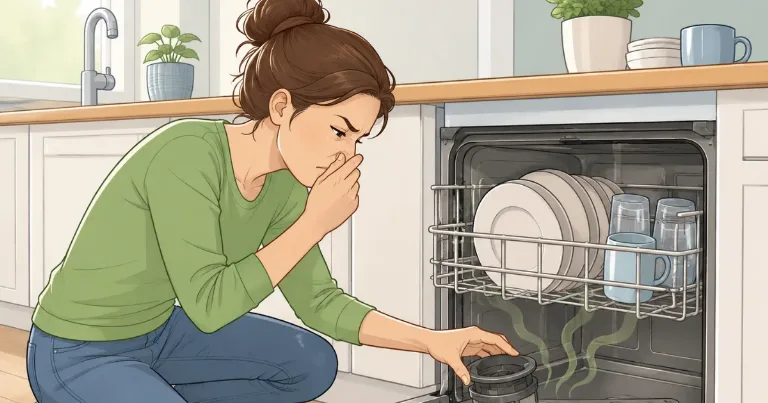

I recently visited a friend in Manila, and one small kitchen complaint turned into a long conversation. It sounded funny at first because her dishwasher was making clean plates smell like wet dog. The dishes looked fine, the glasses looked clear, and nothing inside looked obviously rotten. But once everything dried, the stale, damp smell came back. It was strange enough that I decided to write about it, because the first place to check is also one of the easiest places to miss. The dishwasher filter.
Start With the Filter and Drain Area
If your dishwasher smells like wet dog, check the filter at the bottom first. This is where old food, grease, sauce, rice, and soft residue can collect. When the dishwasher runs again, water moves through that area, and the smell can spread to dishes that still look clean.
Remove the bottom rack and look near the base of the dishwasher. Many filters twist out, but the design depends on the model. If it does not move easily, check the manual instead of forcing it. Rinse the filter under warm water and scrub the mesh gently with a soft brush.
Do not clean only the removable filter. Clean the space where the filter sits too. The filter housing can trap slime, tiny food pieces, seeds, labels, and cloudy water. If the smell is strongest when you lean close to the bottom of the dishwasher, this area is probably part of the problem.
Also check for standing water. A small amount of water near the sump can be normal in some machines, but a pool of dirty or smelly water is different. That can point to a blocked filter, dirty drain path, or drainage problem.
A dishwasher cleaner can help after this, but it should not be the first move. Cleaning tablets may freshen the tub, but they cannot always remove food stuck under the filter or residue sitting near the drain. Physical cleaning comes first, then a hot empty cycle with a dishwasher cleaner or white vinegar if your manual allows it.
Do not mix cleaning products. Vinegar, bleach, and dishwasher detergent should not be combined. Be careful with bleach too, especially if your dishwasher has a stainless steel interior.
Use the Smell Pattern to Narrow It Down
The wet dog smell does not always come from one place. Sometimes it starts in the filter. Sometimes it comes from poor draining, blocked spray arms, hard-water film, or food residue that is harder to rinse away. The pattern can help you decide what to check next.
| What you notice | What it may mean | What to check next |
|---|---|---|
| Smell is strongest near the bottom | Food buildup or dirty water is sitting low in the machine | Filter, filter housing, sump, and drain area |
| Dishes smell worse after drying | A thin film may be clinging to the surface | Spray arms, rinse aid, hard-water buildup, water temperature |
| Glasses and mugs smell worse than metal items | Mineral film or detergent residue may be holding odor | Limescale cleaner, rinse aid, detergent amount |
| Smell shows up after egg, fish, or dairy | Protein residue may be spreading during the wash | Scrape well, rinse heavy residue, use a hotter cycle |
| Smell returns after cleaning the inside | Odor may be coming from the drain setup | Drain hose, sink drain, garbage disposal connection |
| Door area smells sour or damp | Grease and food film may be sitting in the seal | Rubber gasket, lower door edge, inside rim |
This table is useful because the problem can feel confusing when the dishes look clean. If the odor appears only after drying, the surface of the dishes may be holding a film. If the bottom of the machine smells bad before you even run a cycle, the filter and drain area deserve more attention. If the smell returns quickly after cleaning, look under the sink.
When Cleaning the Filter Is Not Enough
After the filter, check the spray arms. These are the spinning arms that push water around the dishwasher. If the small holes are blocked by mineral deposits, seeds, paper bits, or food grit, the machine may not rinse dishes well. It can still sound normal, but the water may not be reaching everything with enough force.
If your model allows it, remove the spray arms and rinse them. Clear the holes gently with a toothpick or small brush. If you shake the arm and hear debris inside, rinse it until the loose bits come out.
Hard water can also make the smell stick. If glasses look cloudy, plates feel slightly rough, or the inside of the dishwasher has white buildup, mineral film may be holding odor on the surface. A dishwasher cleaner made for limescale or mineral buildup can help. Rinse aid may also help dishes dry cleaner, especially if water spots are common.
Food residue matters too, especially egg, fish, dairy, and thick sauces. You do not need to handwash everything before loading, but heavy protein residue should be scraped well. If dried egg or fish sits on a plate for hours, a short rinse before loading can help stop that smell from spreading through a warm cycle.
Water temperature is another small thing that can change the result. If the dishwasher starts with lukewarm water, grease may not break down well. Run the kitchen tap until the water is hot before starting the dishwasher. A hotter cycle can also help after greasy loads, especially if you usually use short or eco cycles.
If the smell still returns, check the rubber door seal. Food and greasy water can collect along the lower edge of the door, especially in the corners. Wipe the seal, the inside rim, and the bottom edge of the door with warm soapy water, then dry the area with a clean cloth.
The sink drain can also be involved. Dishwashers usually drain through a hose under the sink, often near the garbage disposal or sink drain. If that hose is kinked, clogged, loose, or installed poorly, dirty water can sit in the line or move back toward the dishwasher.
Look under the sink for a crushed hose, leak, loose connection, or bad smell near the disposal. If the odor started after replacing the dishwasher, garbage disposal, sink, or drain hose, the setup may need another look. Some installations need a proper high loop or air gap, depending on the manual and local plumbing rules.
Moisture can keep the smell coming back. A dishwasher stays warm and damp after a cycle, especially in humid weather. After unloading, leave the door slightly open so the inside can dry.
A wet dog smell does not always mean the dishwasher is broken. Most of the time, something is holding old food, dirty water, film, or moisture. Start with the filter and drain area. Then use the smell pattern to check the spray arms, door seal, hard-water film, food residue, water temperature, and drain hose. That order gives you a better chance of finding the real cause before blaming the detergent or buying another cleaner.